The Woods
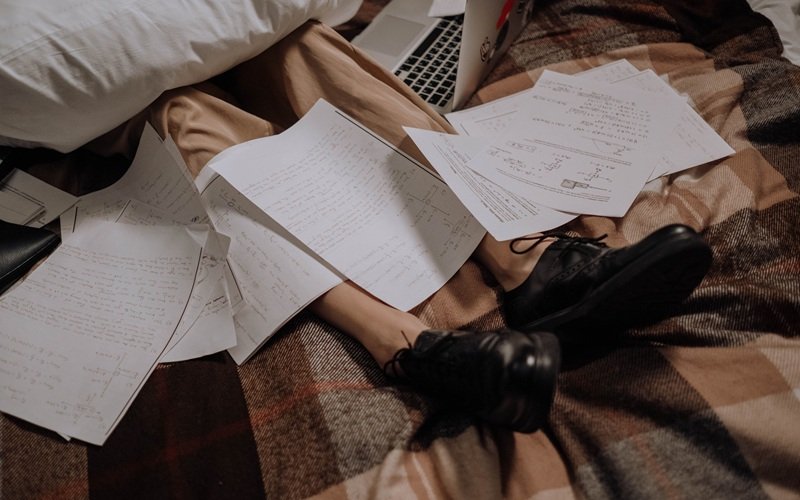
The apartment was quiet except for the low hum of the refrigerator and the rain tapping against the glass. Maya sat on the edge of her unmade bed, staring at the unopened letter on her desk. It had been sitting there for three days—a formal notice of termination from the firm where she had spent the last six years.
Her phone buzzed on the nightstand. Another text from her sister, asking if she’d looked into filing for unemployment yet or called any recruiters. Maya didn’t pick it up.
Instead, she pulled her knees up to her chest and stared out the window into the gray afternoon. Why now? she thought, the familiar, heavy knot tightening in her chest. Why did it have to be my department? After everything I gave to that place?
It was easier to stay under the duvet. It was easier to replay the office politics in her head, to catalog every unfair thing her manager had ever said, and to tell herself that the market was ruined anyway. Outlining her resentment felt like a full-time job, but it was a safe one. As long as she was the wronged party, no one could expect her to fix anything. Taking charge meant opening job portals, updating a resume she hadn’t touched in years, and facing the terrifying possibility of being rejected all over again. Blame was a soft blanket; agency was a cold room.
She closed her eyes, letting the fatigue roll over her, fully intending to surrender to another wasted evening in the dark.
Then, her laptop screen on the desk flared bright with an incoming email notification.
The preview line popped up in the corner of the monitor. It wasn’t from a recruiter, and it wasn’t an automated newsletter. It was a direct message from Half-Said, titled simply: ‘Too Tired to Save Myself’.
Maya sighed as her hand hovered over the mouse.
It’s Not You
There’s a moment when emotional pain ceases to be a sharp, acute sting and instead becomes a heavy, suffocating atmosphere. It makes the simplest acts of daily existence feel like navigating underwater. When you are living inside that level of profound fatigue, the popular advice to take control, choose happiness, or become your own hero does not sound inspiring. It sounds exhausting. It feels like asking someone who has just run a marathon on a broken ankle to turn around and climb a mountain.
In those moments of deep depletion, retreating into the loop of asking why me? is not an act of malice or conscious manipulation. It is surrender. It is the sound of a spirit that has run completely out of fuel, reaching for the only shelter left available: the passive safety of powerlessness. To understand why we hide behind our pain, we first have to offer ourselves the grace of understanding how we got so tired in the first place, allowing ourselves a moment of stillness before trying to fix what feels broken.
The Weight of Carrying It All
Long before a person retreats into the safe harbour of victimhood, they usually spend a very long time trying to be strong. We live in a world that glorifies relentless resilience, urging us to dust ourselves off and keep moving forward regardless of what has been shattered inside us. But resilience is an active energy, and active energy requires a source to draw from. When life deals blows that feel unfair, unexpected, or deeply cruel, our internal emotional reserves slowly drain away. We try to rationalise, to fix, to negotiate, and to carry the weight gracefully, but when the strain outlasts our capacity to cope, a shift occurs. The mind, recognizing that it can no longer fight the tide, looks for a way to stop the bleed.
Blame as an Act of Self-Preservation
When we point a finger outward and wonder why the world has singled us out, what we are often really saying is that we simply cannot carry the responsibility for our healing right now. Pointing the blame at circumstance, past betrayals, or unfair conditions acts as a temporary painkiller. It transfers the burden of accountability away from a heart that feels far too fragile to hold it.
If the cause of your suffering is entirely external, then the burden of fixing it cannot possibly rest on your shoulders today. In a very real way, retreating into helpless pain is an unconscious survival strategy. It grants an exhausted soul permission to lay down its arms and rest.
The Trap of the Safe Harbor
The difficulty is that what begins as a necessary pause can gradually become a permanent address. The shelter of helplessness is warm and familiar. It protects you from the terrifying risk of trying again and failing. If you step back into the driver’s seat of your life, you expose yourself to the possibility of more hurt, more disappointment, and more effort.
Staying in the passenger seat—even if the driver is a painful memory—feels safer simply because it demands nothing new of you. Yet, in choosing the safety of the passive passenger, we inadvertently hand the keys of our future over to the very experiences that broke us.
Gentle Truths for the Exhausted Heart
If you recognize yourself in this slow retreat, it is crucial to know that you are not broken, lazy, or irredeemable. You are simply tired. The goal is not to shame yourself for seeking shelter, but to gently recognize when the walls you built for protection have begun to block out the sunlight.
Validating the Hurt Without Giving It the Pen
There is a vital distinction between acknowledging genuine hurt and allowing that hurt to write the rest of your story. Your pain is valid, and the unfairness of what happened to you is entirely real. You do not need to downplay the weight of what you have carried just to earn the right to move forward.
Healing does not ask you to pretend that the injury didn’t hurt; it simply asks you to notice that the wound is no longer actively being inflicted in this present moment. You can hold deep compassion for the version of you that was hurt while still extending a warm hand to the version of you that deserves to live fully today.
Choosing Rest Over Permanence
Resting inside your pain is understandable, but making it your permanent identity cuts you off from the possibility of repair. When you give yourself permission to be wounded without concluding that you will forever be broken, the nature of the heavy weight changes. It ceases to be an unchangeable reality and becomes a temporary condition—a long winter that eventually makes space for spring.
Reclaiming Your Energy
The transition from hiding behind pain to stepping back into your life does not happen through a grand, dramatic declaration. It does not require you to wake up tomorrow fully energized, completely healed, and ready to conquer everything in your path. When you are genuinely exhausted, true transformation happens through the smallest possible movements.
Stepping Out of the Infinite Loop
The question of why me? is an infinite loop with no satisfying exit, demanding logic from events that are often inherently illogical or unfair. Gently guiding your mind away from that endless cycle and toward the simplicity of the present moment lowers the noise inside your head. You do not need to solve the narrative of your whole life today. You only need to respond to the gentle reality of right now.
Baby Steps
Agency returns not in giant leaps, but in whispers. It begins when you realize that you still have tiny choices available to you. Opening a window to let in fresh air, pouring a warm glass of water, or choosing to sit in stillness for five minutes instead of scrolling through painful thoughts are all small acts of reclaiming your life.
Each small choice is a gentle vote of confidence in your ability to participate in your own existence again, proving to yourself that you are not entirely at the mercy of the storm.
Letting Strength Be Soft
We often imagine our internal strength as a stern, demanding voice telling us to pull ourselves together. But true strength is rarely cold. Allow your impulse to rebuild to be driven by kindness rather than self-criticism.
You are not rescuing yourself because your current state is unacceptable; you are rescuing yourself because your life is deeply valuable, and you deserve to experience warmth, ease, and peace again.
Stepping Out into the Light
The cloak of pain is heavy, but it feels comfortable because it has been yours for so long. Laying it down feels terrifying because it leaves you open to the elements. But outside that cloak lies the vast potential of your own future.
You do not have to save your entire life today. You only have to stop hiding from the possibility that you are capable of being saved. Honor the fatigue, give yourself permission to rest without blame, and when you are ready, take one small breath back toward the light. You have far more strength remaining than your pain has allowed you to see.