
The Field Behind the House
When Meera moved back to her childhood home after quitting her job, her mother didn’t ask many questions. She simply handed her a pair of old slippers and said, “Go take a walk behind the house. The field must be waiting to meet you again.”
Meera had not stepped into that field in years. As a child, she used to run across it every evening, convinced it held secrets that grown-ups had forgotten how to hear. But now, at thirty, she walked across it slowly, weighed down by the feeling that she had somehow failed at adulthood.
The field was unrecognisable—bare, unplanted, almost desolate. The wind moved through the dry patches of earth as if it, too, was looking for something that had disappeared.
“It’s all ruined,” she murmured.
Her mother, who had followed her silently, smiled at her confusion. “It’s not ruined. It’s resting.”
Meera frowned. “Resting? It looks dead.”
“That’s because you’re only looking at the surface,” her mother replied. “The soil has been growing crops for years. It needs time to breathe. The farmer leaves it fallow every few seasons so it can restore itself. What looks empty is actually healing.”
Meera felt a strange ache rise in her chest, the kind that comes when a truth collides too closely with your own hidden exhaustion.
Her mother placed a hand on her shoulder. “You left your job because you were tired. That doesn’t make you lost, beta. It makes you human.”
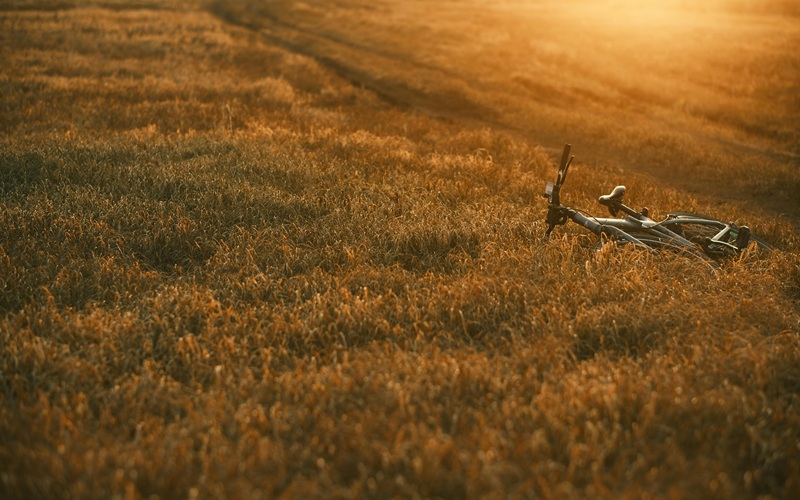
They stood in silence for a long while. The sun dipped lower, turning the field into a soft, gold canvas—quiet, unhurried, unapologetic in its stillness. Meera felt something loosen inside her, something she hadn’t realised was clenched.
For months afterward, she visited the field every evening. She watched it remain bare without shame, watched it accept its lack of activity without fear. Slowly, she found herself doing the same.
One day, months later, green shoots finally emerged—small, stubborn, almost shy. Meera felt a smile rise without effort. The field had returned to life, not because it was forced, but because it was ready.
And somewhere deep inside, she was too.
Rest and Replenishment
There comes a stage in every person’s life when the noise begins to fade, not in a poetic or cinematic way, but in a way that feels heavier and strangely disorienting. Days move slower. Motivation thins out. The sense of direction you once relied on begins to dissolve at the edges. Most people call it a rut, a slump, a dry spell. Nature, however, offers a gentler word—fallow. And within that single word lies an entire philosophy of healing, restoration, and unseen transformation.
A field left fallow is not a field abandoned. It is a field deliberately untouched, given permission to rest so that the soil may replenish what constant cultivation once drained. Nothing appears to happen on the surface. There are no shoots, no harvest, no signs that anything worthwhile is taking place. Yet beneath the fallow, the ground is gathering strength. It is recovering its minerals. It is fortifying itself for the seasons that will demand more of it. That silent, replenishing pause is not just an agricultural technique. It is a metaphor for a life that is allowed to breathe.
What society often labels as stagnation is, more often than not, a fallow season in disguise. And learning to recognise it is the beginning of learning to honour it.
The Quiet We Mistake for Failure
We live in a world that measures time through progress and people through productivity. The moment our days stop looking busy, our minds begin to whisper that something is wrong. We panic at the sight of our own stillness as if being momentarily directionless means our lives are slipping out of our hands.
But stillness is not failure. It is simply unfamiliar.
In the fallow season, life asks you to step out of the rhythm of constant doing. It asks you to be patient with the slow unfolding of things, to accept that there are chapters where your only responsibility is to exist. Yet that becomes uncomfortable because existence without achievement feels unacceptable in our self-judging world.
However, there is a profound truth hidden in the slowness. Just because you cannot see your growth does not mean you are not growing. Just because your life is quieter does not mean it is empty. The pause is not a dead space—it is a preparatory space.
The Hidden Work Happening Beneath the Surface
Every meaningful transformation begins long before it becomes visible. Roots strengthen out of sight. Soil restores itself without any external applause. And human beings, too, undergo their deepest shifts internally.
During the fallow season, your mind is sorting through old wounds, discarded dreams, accumulated fatigue, and unresolved emotion. Your body, often exhausted from years of pushing, is asking for repair. Your sense of identity, shaken by challenges and transitions, is quietly redefining itself.
To the outside world, it looks like nothing is happening.
Inside, everything is rearranging itself.
This is why forcing yourself to rush out of a fallow season never works. You may sprout prematurely, but you will not have the strength to sustain the bloom. The most sustainable phases of growth are always preceded by a period of stillness that feels uncomfortable but necessary.
Releasing the Need to Prove Yourself
One of the hardest things to accept is that you do not need to justify your periods of rest. You do not need a reason to be tired, a crisis to slow down, or an achievement to validate your worth. Your right to pause is inherent. It does not need approval.
The fallow season gives you space to release the pressure you’ve been carrying for years—the pressure to be productive, to be perfect, to be ahead, to be constantly improving. It teaches you that value is not measured by output, and purpose is not defined by momentum.
When you embrace this season, you begin to understand that life is cyclical. There will always be months shaped by movement, growth, and clarity. But equally important are the months shaped by rest, reflection, and quiet repair. Recognising this rhythm allows you to live more gently with yourself, instead of fighting against the currents of your own nature.
The Slow Re-emergence of Light
The beauty of a fallow season is that it ends. You may not even notice the shift when it first arrives. One morning, you will feel a subtle spark—an idea you want to explore, a piece of energy you thought you lost, a feeling of possibility returning after a long absence.
Something small inside you will begin to stretch again.
This is not the sudden bloom people romanticise. It is the reawakening that follows months of deep, invisible repair. It is the moment when the inner soil finally feels nourished enough to sustain growth. Little by little, without pressure, your life will find its rhythm again. And this time, the rhythm will feel more authentic, steadier, and kinder.
You will start to understand why the pause was necessary. You will look back and realise that what felt like emptiness was actually preparation. What felt like delay was protection. What felt like ending was making space for a beginning you could never have rushed into.
Trusting the Season You’re In
Every person’s fallow season looks different. For some, it arrives after heartbreak. For others, after burnout, loss, or unexpected changes. Sometimes it comes without a clear reason, simply because your mind and body can no longer carry the pace you once demanded from them.
Whatever shape it takes, it is not a punishment. It is an invitation.
Trusting this season means accepting that you do not yet know what is growing within you. It means believing that stepping back is not the same as stepping away. It means remembering that nature does not apologise for resting, and neither should you.
Your fallow season is not an interruption of your life. It is a vital part of it—an uncelebrated chapter that fortifies you for everything that comes next.
And when the bloom finally returns—and it will—you will rise not as someone who simply survived the silence, but as someone who learned the art of the fallow season.

Pingback: Embrace Your Fallow Season: Unlock Rest for Better Growth